
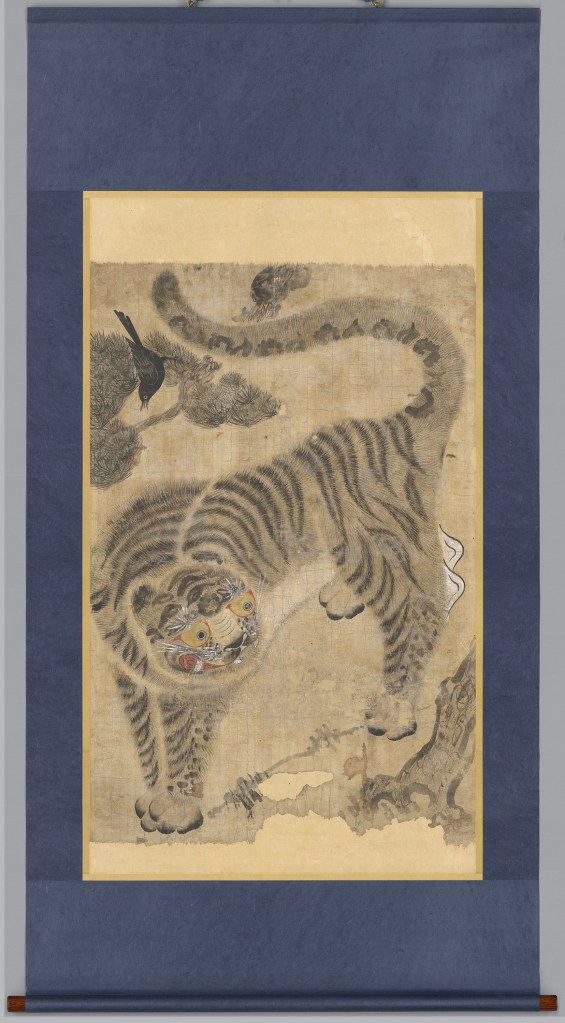
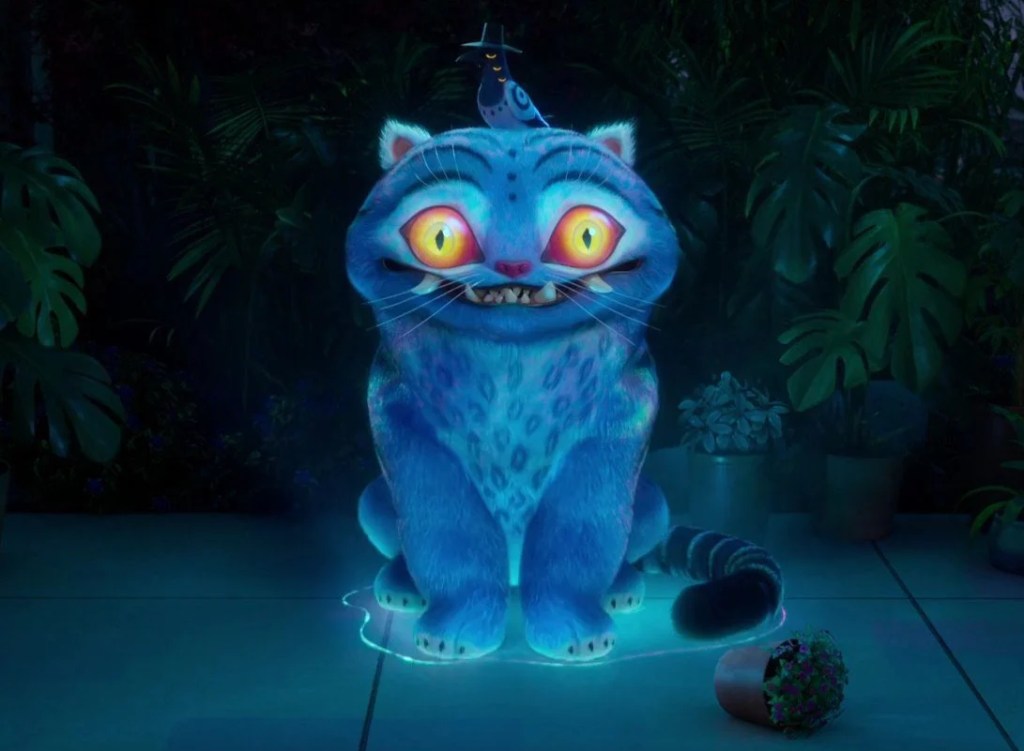
from the Netflix movie, K-pop Demon Hunters
From Minhwa to Merch Line: The Resurgence of the Tiger and Magpie
Why are museum gift shops sold out of traditional paintings of tigers and magpies? The answer seems simple: the merchandise looks almost identical to the art featured in the Netflix movie <K-Pop Demon Hunters>. With fans lining up to get a piece of their favorite movie, it’s clear the 까치와 호랑이 (magpie and tiger) motif is now a pop culture icon. The art, which was originally launched as merchandise in 2024, has recently seen a surge in sales without any specific promotion—a testament to its visual appeal and a fandom’s powerful influence.
But for those who are buying it, there’s a deeper story waiting to be told. The producers of <K-Pop Demon Hunters> didn’t just stumble upon this beautiful art; they intentionally reinterpreted its ancient wisdom. This blog post is for the fans who love the aesthetic but may not know the rich cultural history behind it.
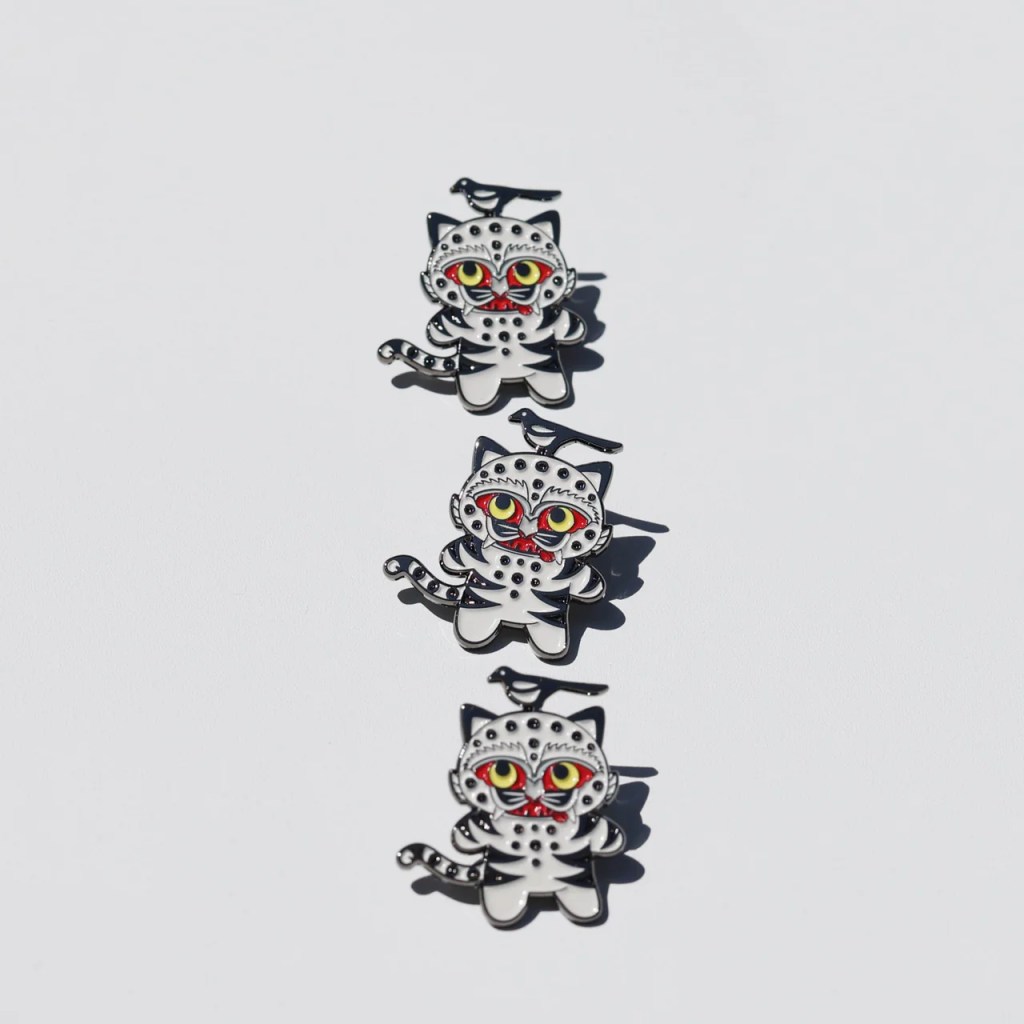
The Endearing Guardian: A Fun Twist on Fear
At first glance, the tiger is a fearsome beast. Yet, in these traditional 민화 (Korean folk paintings), the tiger’s face is often comically expressive—not frightening, but goofy and charming. This isn’t an artistic mistake; it’s a brilliant cultural twist.
These paintings were historically hung on doors and walls at the beginning of the new year, a tradition known as 호축삼재 (Ho-chuk-sam-jae), which means “the tiger dispels the three calamities.” The goal was to ward off evil spirits and bad luck. But who wants a terrifying beast guarding their home? An overly scary tiger might be more frightening than the ghosts it was meant to chase away! The friendly, comical expression made the tiger an endearing and approachable guardian, a comforting force of good rather than a source of fear. It shows a core part of the Korean character: the ability to overcome hardship and fear with humor and warmth.
The Perfect Couple: A Clever Magpie and a Clueless Tiger
The relationship between the magpie and the tiger adds an even deeper layer of social commentary. The magpie, or 까치, is traditionally seen as a messenger of good news, while the tiger is a powerful guardian. Yet, in many paintings of Tiger and Magpie, which often called 호작도(Ho-jak-do), the dynamic is far more complex than just a simple protector and herald.
In one popular interpretation, the magpie represents the 민초 (common people), while the tiger stands in for corrupt government officials who abused their power. The artists cleverly used their brushes to express a subtle form of social protest. The magpie is often painted with a bold, confident posture, while the tiger looks foolish and bumbling, and even a bit silly—as if the magpie is openly mocking the powerful. It’s a masterful display of wit that allowed the common people to ridicule those in authority with a single image.
Of course, other meanings exist. Some believe the magpie simply acts as a messenger between the mountain spirit and the tiger, while others say it was just added to make the painting more fun. Regardless, the playful tension and unique synergy between these two figures have made them the best couple in all of Korean folk art.
From Minhwa to the Movie: The Characters Were Reinterpreted
This is where the producers’ artistic genius shines. The creators of <K-Pop Demon Hunters> didn’t just use them as set dressing; they meticulously reinterpreted the very core of its symbolism to create two unique and unforgettable characters. Derpy, the tiger, and Sussie, the magpie, are not just companions—they are a brilliant modern update to a centuries-old folk art tradition.
- Derpy, The Tiger of Tradition and Modern Humor
The tiger’s design is a direct nod to the traditional 까치호랑이 paintings, which often depict the tiger with comical, uneven eyes. This is why he was given the name Derpy, a perfect fit for his clumsy, lovable persona. His obsession with setting fallen objects upright—a task he comically fails at—is a fantastic modern twist that adds to his charm.
However, Derpy’s cuteness hides his true nature. The movie hints at the traditional purpose of 호작도(Ho-jak-do), which was created to scare away evil spirits, by showing Derpy’s eyes glowing red as he terrifies minor demons. He is not just a bumbling sidekick; he is a 선한 요괴 (good yokai) and a powerful protective spirit who can exist in any realm. His ultimate allegiance and display of emotion during Jinu and Rumi’s conflict solidifies his role as a benevolent guardian, the heart of the folk painting given a new life. - Sussie, The Clever and Cunning Magpie
Sussie, the magpie, represents a modern, clever update to the traditional role of the 까치. While the folk art magpie is a cheerful messenger, Sussie is sharp and intelligent, with a design that is wholly original—three pairs of eyes, reflecting his suspicious nature and a keen intellect that makes him a contrast to Derpy’s goofiness. His name “Sussie” (from “sus eye”) perfectly captures his personality.
While Sussie isn’t explicitly a messenger for good news, his presence as a companion and witness to the events serves a crucial narrative role. The creators used the magpie’s traditional symbolism to reinforce a theme of communication and information, whether through Jinu’s letters or simply by being a watchful presence.
Together, Derpy and Sussie are a perfect reinterpretation of 호작도(Ho-jak-do). Their dynamic as loyal but often comedic companions, who were a part of Jinu’s life and later become part of Rumi’s, embodies the playful spirit and symbolic power of the original folk painting. The movie didn’t just borrow the motif—it created a modern, animated version of the folk painting’s characters, whose unique personalities and backstories make the symbolism more tangible and beloved than ever.
A Beautiful Discovery
The fact that fans are buying this merchandise simply because it looks cool is a powerful thing. It shows how traditional art can transcend its original meaning and find a new audience through modern media. Whether they know it or not, fans are carrying on a tradition of celebrating a protective, humorous, and deeply symbolic piece of Korean heritage.
This unexpected trend shows how different pieces of our culture, from the peaceful pursuit of quiet contemplation to the vibrant world of folk art, are all part of the same rich tapestry. If you’re interested in another perspective on this, you might enjoy my previous post about the room of quiet contemplation.
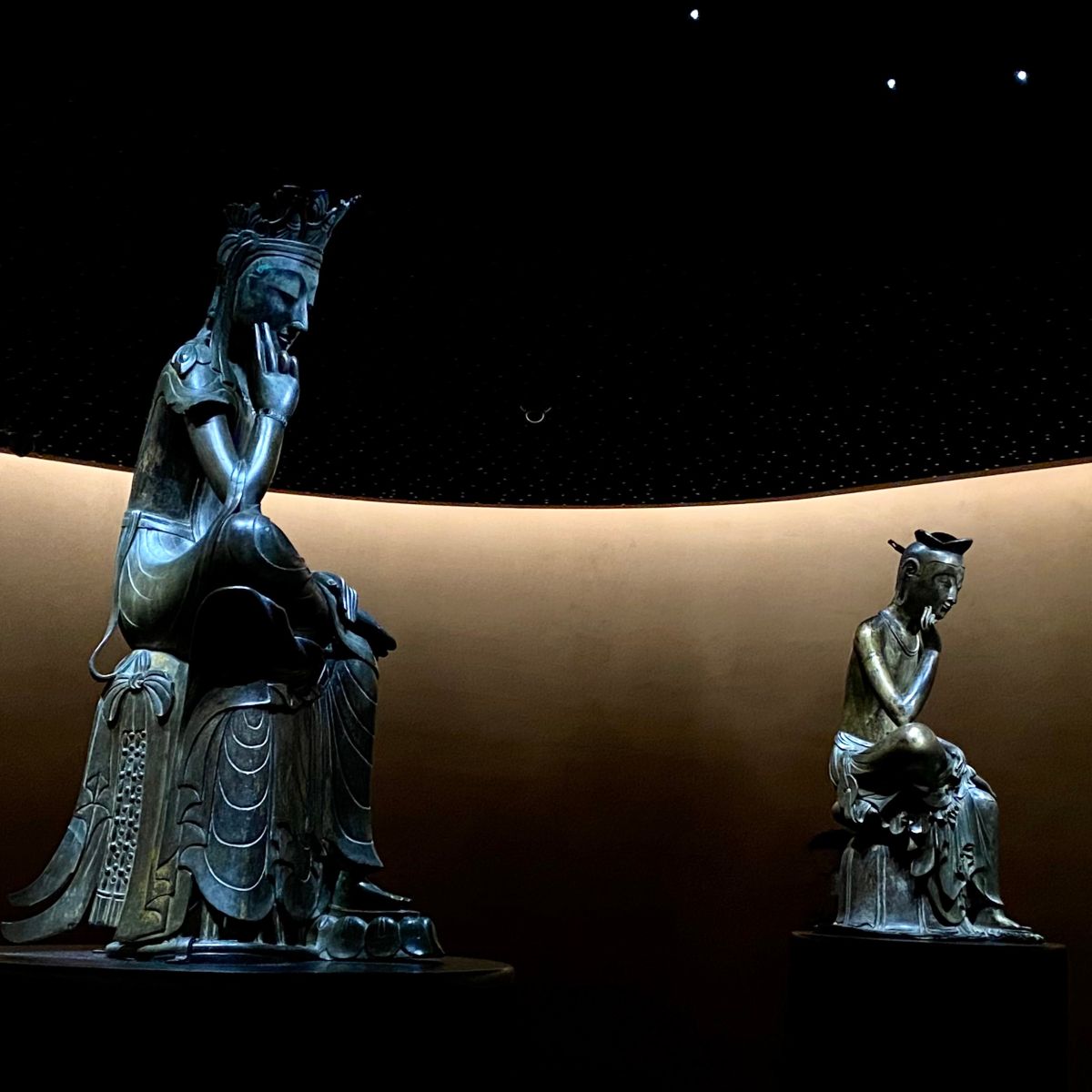
Secret Guide to Seoul: Finding Peace in the Room of Quiet Contemplation (사유의 방)
I’ve been thinking a lot about the first “hidden spot” I want to reveal in Seoul. While most people come here for the shopping, nightlife, or K-drama locations, one of the city’s most profound cultural treasures is actually hidden in plain sight: the National Museum of Korea. Now, I know what you’re thinking—a museum might sound…
Also, if you’re interested in shopping the goods online, please visit their online shop.

MU:DS
National Museum Goods of Korea
Shop Online

Leave a comment